Hotel Reservation Software is All About Accepting And Streamlining Bookings Coming Through Multiple Channels By Riddhiman Roy, Market Analyst at SelectHub

Are you losing sleep at night due to the fear of double booking? Are you tired of handling reservations manually from multiple sales channels? Fret not, hotel reservation software is here to save your day. These solutions alleviate the pain points of traditional booking management, helping you simplify operations, ensure accuracy and enhance guest experiences.
In this buyer’s guide, we’ll navigate you through the essential factors to consider when choosing the right hotel reservation software for your business. We’ll cover benefits, software comparison strategies and pricing models, ensuring you have all the necessary insights to make an informed decision. Let’s dive in!
Executive Summary
- Hotel reservation software is a one-stop shop for all your business’s booking management needs. It connects to every sales channel, centralizes bookings and syncs inventory data across channels.
- These solutions help improve collaboration between front desks and sales departments, avoid the cost of hiring individual channel managers and collect reservation data to promote data-driven decision-making.
- Due to the various options in the market, choosing a solution for your business isn’t a walk in the park. You must create a requirements checklist and budget to identify platforms useful to your cause and not burn a hole in your wallet.
What This Guide Covers: Primary Benefits
Streamline Front Desk Operations
Whenever a traveler books a unit, the system updates every backend platform, including payment gateways, property calendars and sales teams. It automatically updates pricing and availability across every marketing channel, allowing reception staff to perform more personalized tasks.
Reduce Costs
A hotel reservation system can let you securely accept and manage online reservations. While the process is similar to booking with an OTA, the difference is that the reservation engine can directly link to your website and accept bookings. Direct bookings help avoid any third-party fees and commissions involved.
Improve Customer Experience (CX)
A reliable reservation engine allows you to set up multiple CTAs and provides customers intuitive navigation throughout the booking process. Connect the engine to external digital wallets and loyalty programs to offer flexible payment options and improved CX.
Ensure Accuracy
Human fallibility is a far less significant factor when customers have self-guided booking processes. After bookings, you can automatically distribute information to convenient channels, ensure accuracy and avoid double bookings.
Adopt a Data-Driven Approach
Consolidate large amounts of customer data floating through disparate channels in a unified platform. You can use this data to identify new opportunities and improve existing processes. Clean data also adds a layer of protection in case of disputes and allows quick audits.
Key Features & Functionality
In this section, we’ve listed some primary features necessary in hotel reservation software:
| Booking Engine | The engine should offer travelers intuitive, guided booking experiences and convert them to guests with a few clicks. You can ensure the visibility of important documents like terms and conditions, cancellation policies, corporate policies and more. |
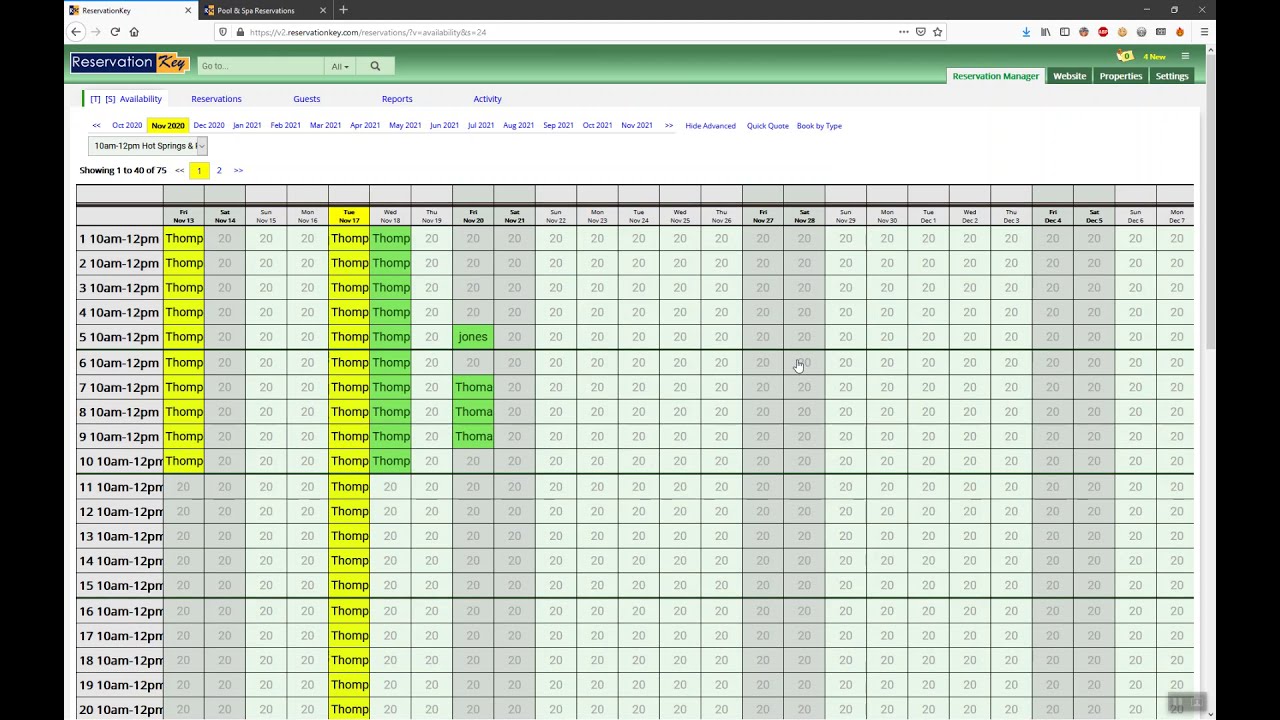
| Interactive Calendars | The system provides a synced calendar across every channel for guests, staff and managers to view and edit. Most solutions offer drag-and-drop tools for managers to edit reservations and assign tasks. |
| Pricing Engine | A PCI-DSS compliant engine can help distribute personalized pricing across various sales channels based on season, customer profile, discounts and more. Look for engines that support integration with your preferred payment gateway. |
| Data Handling | The platform should collect, organize and offer easy accessibility to customer data like phone numbers, addresses, identity information, purchase history and more. You should also be able to export data easily. |
| Automated Emails | You can set up rules for automated emails throughout the guest lifecycle, including booking confirmation mails, tips during the stay, feedback forms and more. Many systems offer a library of customizable email templates. |
| Omnichannel Marketing | Connect with every sales and marketing channel your business operates on, such as personal websites, social networks, OTAs and metasearch sites. |
| Mobile-Optimized | The platform should be accessible via mobile devices both for customers and management teams. You can promote remote workflow via real-time, event-based notifications and calendar editing tools. Some solutions offer a mobile app to perform advanced management tasks from remote areas. |
| Integrations | Hotel reservation software is a cog in the larger hotel management category. So the platform must easily integrate with your existing software stack for streamlined digital operations. It should also connect seamlessly with your website’s frontend for a connected customer experience. |
Software Comparison Strategy
The global hotel reservation software market was $707 million in 2021 and is expected to reach $1379.5 million by 2028 at a 9.9% CAGR. It’s a diverse market with various options based on the features list, deployment options, distribution channels, business scale and more. There isn’t a single fit-for-all solution that can serve every type and size of business. You need to find a suitable system that can manage all your operations and not complicate matters with undesired features.
Here are a few factors to consider during your software selection process:
-
Deployment Strategy: Based on your IT infrastructure and technical expertise, choose a deployment strategy that fits your needs. SaaS is easy to run and maintain but might falter during business scaling. On the contrary, on-premise deployment has a higher IT and infrastructure cost but provides absolute control over the software architecture.
-
Business Scale: Hotel reservation software can vary depending on the number of rooms, properties and team members it can support. Select a solution that can accommodate your entire business and help streamline daily operations.
- GDS Connection: If your business lists properties on a GDS, choose software that connects with the network and syncs pricing and availability across thousands of sales channels.
-
Usability: Select a system with an interface that you and your team are comfortable working on. Many vendors offer trial periods, so you can opt for them to get a feel of the software before your final purchase.
We suggest consulting your team members and compiling an extensive wishlist of all features and requirements. Then cross out vendors not aligning with your needs. You can also request demos, research product reviews and consult your peers for valuable insights.
Cost & Pricing Considerations
The two most popular pricing strategies are commission-based and subscription-based. Hotel chains and enterprises should opt for systems with commission-based pricing as they can tailor the software to meet their business goals and offset the cost via large daily sales volume. Smaller businesses and individuals can go for a subscription-based model with a fixed cost and no hidden expenses.
You should also keep an eye out for the additional fee some vendors charge for adding new sales and listing channels. Here are some additional factors that can affect the pricing of hotel reservation software:
- Native booking engine
- Website building
- Adding new sales channels
- Onboarding and implementation training
- Integrating third-party software
- Priority support
With these pointers in mind, prepare your acquisition budget and pick a software vendor with transparent pricing that you can customize to fit your needs.
Market Trends
Online Travel Agencies
Online travel agencies (OTAs) significantly boost a hotel's visibility and drive sales by reaching a broader audience that may not be accessible through direct bookings. However, this increased exposure comes at a cost. OTAs charge a commission rate ranging from 15% -25% for each booking, which covers their advertising expenses, support services, reputation management and ongoing platform development.
Here’s a breakdown of some common OTA costs:
-
Commission On Upsells: A percentage of the revenue generated from additional services or upgrades purchased through the OTA goes to the OTA as a commission.
-
VAT/GST: Value-added tax (VAT) or goods and services tax (GST) is imposed on OTA bookings and varies by region.
-
Hotel Reservation Software Fee: Some solutions charge additional fees for connecting to OTAs, metasearch engines and other external channels.
-
Cancellation fee: Some OTAs offer free cancellations to entice customers to book through them. This becomes a challenge for accurately forecasting demand. Hotel rooms are perishable assets, and last-minute cancellations lead to a waste of time and resources.
Understanding these costs can help you design well-rounded marketing and distribution strategies that maximize visibility and profitability.
Chatbots
Chatbots have emerged as a game-changing technology for hotels, offering 24x7 customer support and revolutionizing how guests interact with businesses. Here are the benefits of using chatbots:
- Chatbots can handle multiple customer queries simultaneously and offer quick responses.
- You can define rules to personalize chatbot responses based on customer preferences and past interactions.
- They facilitate contactless check-ins, provide virtual concierge services and deliver real-time information, minimizing the need for physical interactions.
- Chatbots promote scalability and save costs by reducing the need for additional customer support staff.
The global chatbot market was valued at $5,132.8 million in 2022 and is projected to expand at a CAGR of 23.3% through 2030. As chatbots continue to gain prominence, hotels that do not leverage this technology risk falling behind the competition.
Embracing chatbots allows hotels to offer exceptional customer support, deliver personalized experiences and stay ahead in the ever-evolving landscape.
Artificial Intelligence
Ever since the launch of ChatGPT in November 2022, we’ve witnessed unique implementations of generative AI across markets and industries. The hospitality industry is not the most adaptive to technology. Reports show that only 30% of service professionals used AI in 2022. But a few big players are introducing AI tools that can improve the technology’s relevance in the industry.
Trip.com launched the TripGen chatbot, powered by OpenAI, to help customers find relevant offers, deals and discounts on flights and accommodation. Kayak launched a ChatGPT plugin that’ll help answer guest queries, and a travel booking company Odigeo partnered with Google Bard to offer better metasearch visibility.
AI’s scope in the hospitality industry doesn’t end at chatbots and customer-facing support programs only. It can also help you analyze data and unearth valuable insights. You can use AI to compare historical data with market trends, upcoming events and competitor rates. It helps forecast demand and strategically distribute rooms on different sales channels, ensuring maximum occupancy and profitability throughout the year.
Questions To Ask
While selecting software, it’s important to ask a lot of questions both internally and to the vendor. Use this list of questions to start a conversation within your team and identify your key requirements:
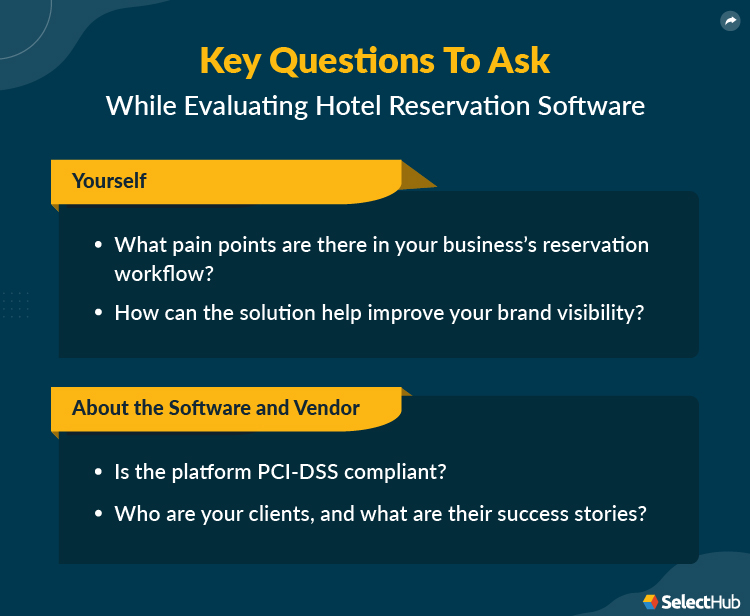
- What pain points are there in your business’s reservation workflow?
- How can the solution help improve your brand visibility?
- Which existing software would need integration with the reservation engine?
- What are your preferred payment gateways?
- What level of reporting do you need?
These questions will aid you in starting a conversation with the vendor and getting a better understanding of their product:
- Is the platform PCI-DSS compliant?
- What support options are available, and what is their average response time?
- Are there any hidden costs associated with adding new sales channels?
- Who are your clients, and what are their success stories?
- Is developer documentation available?
Next Steps
The right hotel reservation software will accentuate your business’s USP and help improve every reservation workflow. Finding an ideal solution for your business can be a challenging task. Remember to select a vendor that can tailor the software just right and leave some wiggle room in how they’ll work with you.
If you need help, you can use our free comparison report to compare the industry’s top products based on custom criteria. Be meticulous while sifting through the various options available and choose a system that not only streamlines operations but also helps you identify new opportunities. Happy selecting!